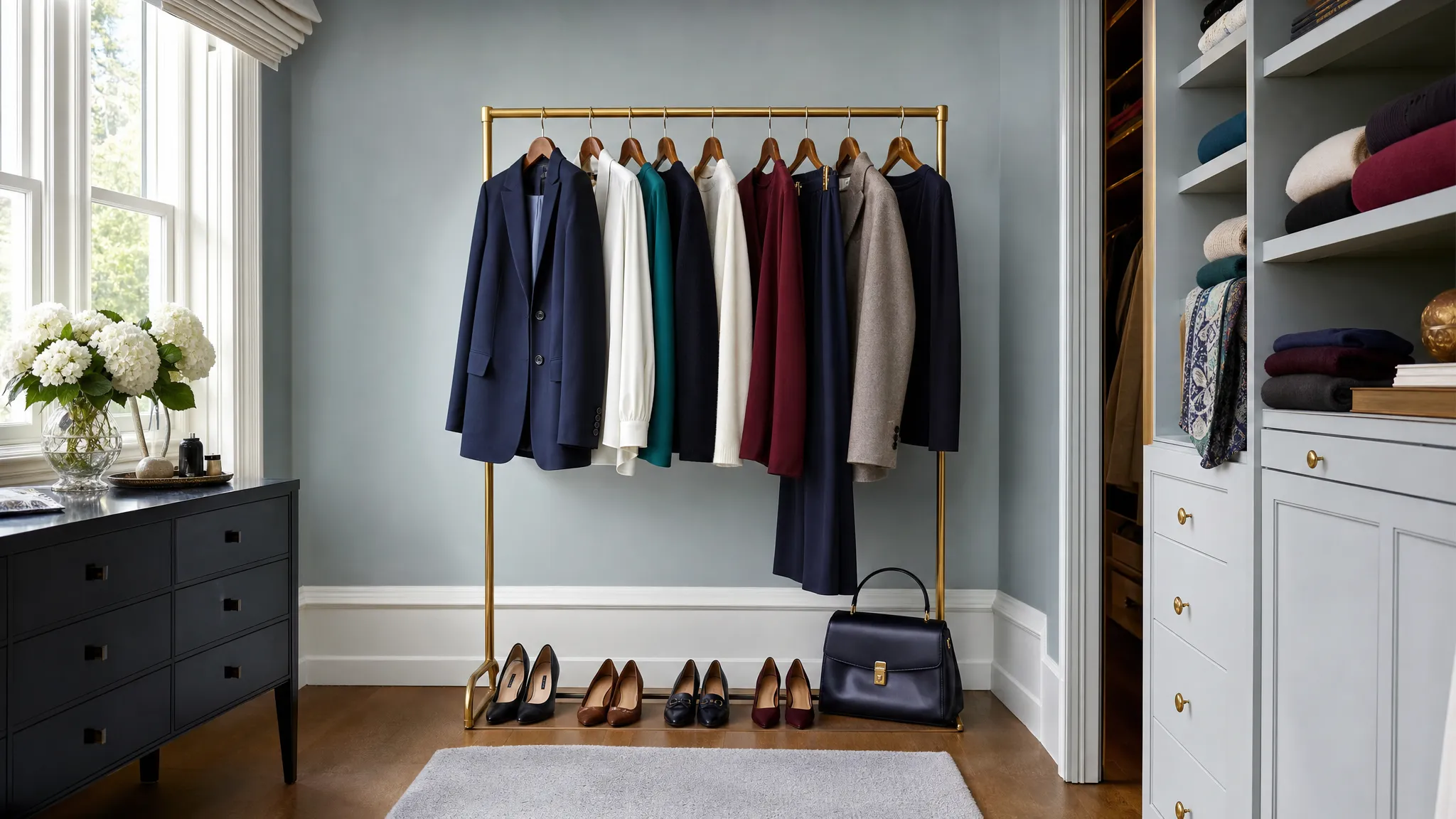
Some mornings, the problem is not that you have nothing to wear. It is that every piece in your closet arrives as a separate decision. You try a top with one pair of pants, then another. You change shoes. You add a jacket. Somewhere in the middle, getting dressed becomes a negotiation you did not have time to start.
Outfit formulas make that decision easier. They are repeatable combinations that give you a reliable starting point for the parts of life you dress for most. They are not uniforms, rules, or a reason to buy a matching set of basics. A good formula is simply a shape you know feels right, made flexible enough to look like you.
Think of the combinations you already reach for: trousers, a refined knit, and a loafer. Straight-leg jeans, a soft blouse, and a structured jacket. A dress, a great shoe, and one strong accessory. The formula is the relationship between the pieces. Once you can see it, you can create more outfits without buying your way out of every difficult morning.
What an Outfit Formula Actually Is
An outfit formula is a repeatable framework, not a finished outfit copied exactly each time. It might be “long layer plus column of color,” “tailored pant plus simple top plus interesting shoe,” or “dress plus jacket plus jewelry.” The framework gives you proportion and purpose. The individual pieces keep it personal.
This is why formulas work better than a generic list of wardrobe essentials. A list tells you to own a blazer or white shirt. A formula asks whether that blazer works with your pants, whether the shirt has the right neckline under it, and whether you will actually choose the shoes that finish the look. It turns a closet into a set of relationships rather than a collection of isolated purchases.
The goal is not to make every outfit look the same. The goal is to reduce the number of decisions that do not deserve your best energy. You can still wear color, print, a favorite vintage piece, or something unexpected. Your formula just gives those choices a home.
1. Start With the Situations You Repeat
Before you build formulas, look at your actual week. Not the week you think you should have, and not the fantasy version you might dress for on vacation. Where do you really go? Consider work, client meetings, travel, dinners, school events, errands, social plans, and the moments when you need to feel especially pulled together.
Choose three to five repeated situations. Most people do not need twenty outfit formulas. They need a few answers to the moments that create the most friction. For example:
- A polished weekday formula for meetings or a visible workday.
- An off-duty formula that feels relaxed without looking accidental.
- A dinner or event formula that has more presence without requiring a full production.
- A travel formula that layers well and still feels appropriate when plans change.
For each situation, write one sentence about the impression you want to make. “Comfortable” is useful, but it is only the beginning. Try grounded, sharp, warm, creative, feminine, relaxed, or decisive. Those words will help you choose between two otherwise acceptable pieces.
If your life or role has changed recently, start there. A closet can feel difficult because it is still trying to dress someone from an earlier season. Anne’s guide to rebuilding your wardrobe after a life change can help you notice what has genuinely changed before you decide what belongs next.
2. Find the Pieces That Already Make You Feel Right
Your best formulas are usually hiding in plain sight. Pull out the clothes you wear without talking yourself into them. That might be the pants that fit every time, the jacket that changes your posture, the dress that never needs rescuing, or the shoe that makes several outfits feel finished.
Then ask what each piece is doing for you. Is it the clean line through the body? The level of structure? The color near your face? The ease of a low heel? The way a longer jacket balances a wider pant? You are looking for a pattern, not trying to crown one item as perfect.
There is a useful distinction here. A favorite piece is something you love. An anchor piece is something that helps other clothes make sense. One excellent pair of trousers may work with six tops, two jackets, and three pairs of shoes. It is doing more for your wardrobe than a beautiful top that only works with one particular skirt.

3. Build Around Proportion Before You Worry About Details
When an outfit is not working, people often blame the color or assume they need another accessory. More often, the shape is what feels off. The lengths, volume, and balance between the pieces do not support each other.
Start with a few proportions you like on your own body. You may feel best in a more defined waist with a wider leg. You may prefer a straighter column with a longer jacket. You may like a soft top balanced by a sharper pant, or a dress with a substantial shoe. There is no universally flattering formula. The useful one is the combination that lets you move, sit, and be seen without adjusting yourself all day.
Try each formula in front of a mirror with the shoes and outer layers you would actually wear. Do not judge the shirt alone. A top that seems ordinary on a hanger can become useful under the right jacket. A pant that feels difficult may simply need a shorter top, a different hem, or a shoe with more visual weight.
Tailoring belongs in this conversation too. If an otherwise excellent piece nearly works, a change in length, waist, sleeve, or shoulder can make it a genuine anchor instead of a recurring disappointment. The goal is not to force clothes to earn their place. It is to notice which small changes make the rest of the wardrobe easier.

4. Use Color as a Connector, Not a Rulebook
Color can make a formula feel intentional, but it does not need to become a complicated personal system. Look for colors that already repeat in your wardrobe: the warm brown in a belt and shoe, a deep wine bag that works with a berry knit, a cream blouse that softens darker tailoring, or a vivid color that makes your face come alive.
One easy approach is a color echo. Repeat a tone or metal somewhere else in the outfit so the pieces feel connected. It can be as quiet as a burgundy belt with a burgundy bag, or as clear as navy trousers with a navy shoe. You are not trying to match every item. You are giving the eye a reason to believe the pieces belong together.
Another useful choice is contrast. If you wear a lot of dark colors, a cream, soft blue, or clear red top can keep an outfit from feeling heavy. If your closet is mostly light neutrals, one darker shoe or jacket may give a look more definition. Anne’s note on using color analysis without letting it make the decisions for you is helpful when you want more clarity without another set of rules.

5. Give Each Formula More Than One Version
A formula becomes genuinely useful when it can flex. Once you have one combination you like, make three versions before you buy anything. Change the top, shoe, jacket, or accessory while keeping the basic shape intact.
For example, a workday formula might be tailored trousers plus a refined top plus a structured layer. Version one uses navy trousers, an ivory blouse, and a camel blazer. Version two uses charcoal trousers, a soft knit, and a deep green jacket. Version three uses the same trousers with a printed blouse and a long coat. The formula stays recognizable, but the result is not repetitive.
Keep a quick photo record of outfits that work. It does not need to be polished or shared. A private album makes it easier to remember the combination that felt right last Tuesday rather than starting from zero again. This is especially useful for travel, events, and weeks when you know your attention belongs somewhere else.
If you need a stronger foundation before you make formulas, begin by organizing your wardrobe around real use. Seeing your categories and best pieces clearly will make the relationships between them much easier to spot.
6. Let the Gaps Reveal Themselves
After you make a few versions of each formula, you will see what the wardrobe actually needs. This is the moment to make a gap list, not a shopping list.
Be specific. “I need tops” does not lead to a good decision. “I need one warm-weather top that works under my navy blazer and with my cream trousers” gives you a real assignment. “I need shoes” is vague. “I need a low, polished shoe that makes my dresses and cropped pants feel more finished” is useful.
Specificity also reveals when buying is not the answer. You might need a hem shortened, a belt added, a jacket taken in, or a piece moved out of the formula entirely. You may discover that you own enough clothes, but they have been organized around purchases instead of outfits.
That is the heart of a working wardrobe. Every new piece should have a job and existing partners. Anne’s guide to decluttering without regret can help when the gap list exposes clothes that are no longer serving any part of your life.
7. Wear-Test Your Formulas Before You Call Them Finished
The mirror can only tell you so much. Wear each formula into real life. Notice whether you spend the day adjusting the waistband, avoiding a chair, wishing you had worn a different shoe, or feeling more like yourself than usual. Those reactions are better data than a list of rules.
Give the formula a few chances. Wear it on an ordinary day, not only on the day when you have the time and energy to make anything work. Does it hold up through a meeting, a long drive, an errand, a dinner, or a change in weather? Does it still feel like you after several hours?
Also notice the clothes that never find their way into a formula. They may be beautiful, expensive, or sentimental. They do not automatically need to leave the closet, but they should not keep dictating future purchases. A wardrobe gets lighter when you stop buying support pieces for a thing that does not want to become part of your life.
When a Personal Eye Helps
Sometimes the hardest part is not finding a formula. It is seeing the thread that connects your best pieces, your real life, and the image you want to project. You may have several almost-right combinations and no clear way to decide which direction is worth investing in.
The Fresh Start Style Session is a focused place to get that clarity. Anne looks at what is working, what is missing, and which decisions will make the biggest difference before you spend more money. For clients who want support with the whole wardrobe, from the edit through shopping and complete outfits, the Style Advisory offers deeper ongoing guidance.
A good outfit formula should not make you feel dressed by a system. It should make it easier to look like yourself, on the days when you have more important things to think about.
Frequently Asked Questions
What is an outfit formula?
An outfit formula is a repeatable combination of shapes, pieces, and finishing touches that you know works for a particular part of your life. It gives you a reliable starting point, not a uniform.
How many outfit formulas do I need?
Start with three to five. Choose the situations you repeat most often, such as workdays, casual plans, dinners, travel, or events, then build one useful formula for each.
Can an outfit formula still feel personal?
Yes. The formula provides the structure. Your color choices, fabric, jewelry, shoes, outerwear, and the pieces that suit you best are what keep it from looking generic or repetitive.
What if I cannot make an outfit from what I already own?
That is useful information. Name the exact missing partner rather than buying broadly. You may need one better shoe, a more useful layer, tailoring, or a clearer idea of which pieces are worth building around.