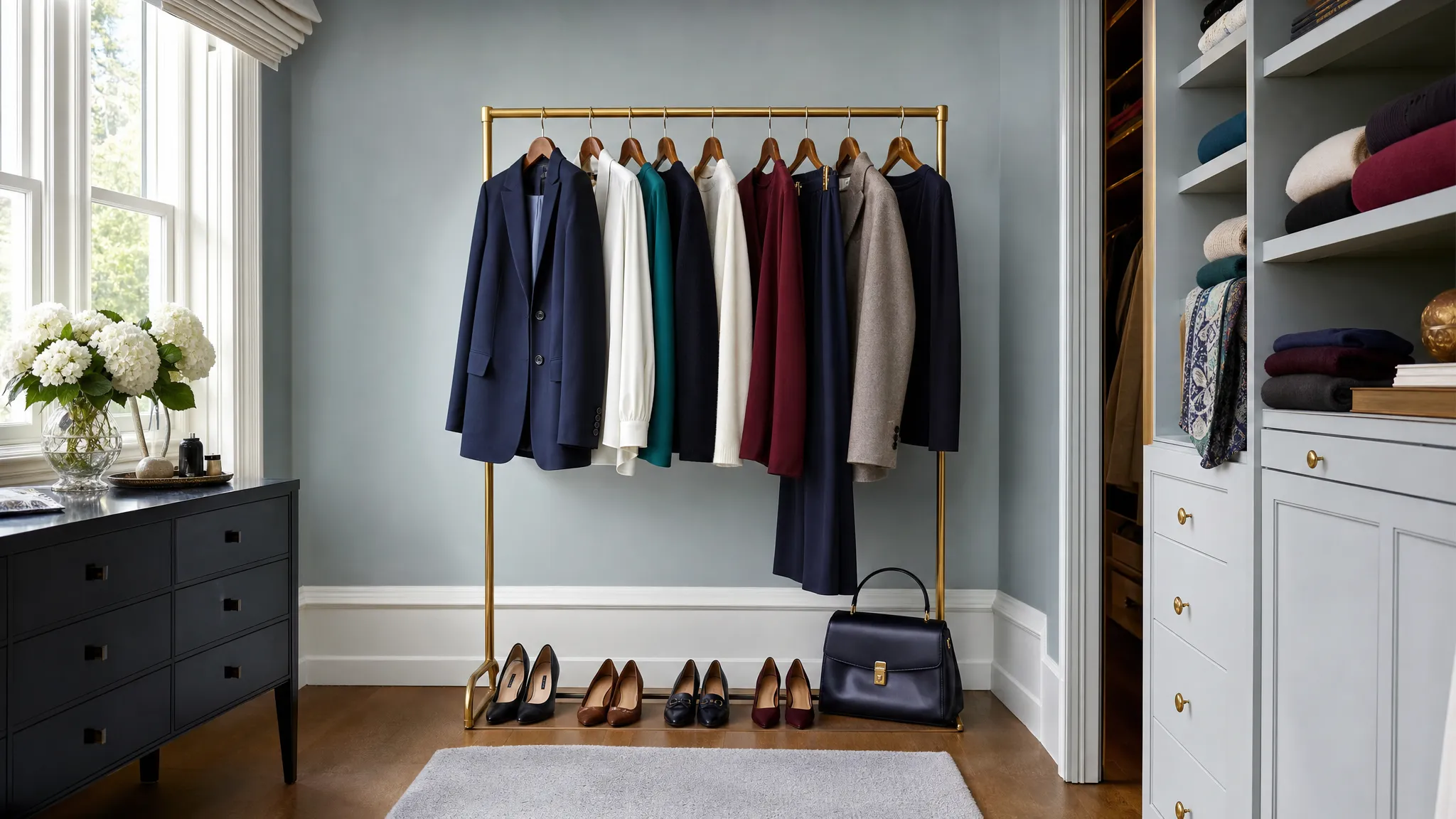
A capsule wardrobe is not a uniform. It is not a punishment for liking clothes, and it is not a strict number of pieces somebody else picked for you.
It is a wardrobe built with enough clarity that getting dressed stops taking up so much of your day. The pieces work together. They work for your real calendar. They support the way you want to feel and the way you want to be seen.
That is why a good capsule can make a full closet feel smaller in the best possible way. It replaces a lot of almost-right options with a smaller group of clothes you genuinely want to wear.
What a Capsule Wardrobe Actually Does
Most people start with a list: two blazers, three shirts, one pair of jeans. A list can be useful later, but it is a terrible place to begin. It assumes everyone has the same life, needs the same level of polish, and enjoys the same balance of colour, ease, and drama. None of that is true.
A useful capsule wardrobe does three things. First, it makes the clothes in it easy to combine. Second, it covers the situations that fill your actual week. Third, it feels recognisable as yours. If it works on paper but you do not want to wear it, it is not a solution.
Think of it as a decision system. When a new piece comes in, you know what job it needs to do. When you get dressed, you have real options instead of a closet full of unrelated items.
Start With Your Life, Not Your Closet
Before you pull out a single hanger, look at the next month. Where do you actually go? What do you need to do there? Work, client meetings, school runs, dinners, travel, exercise, weekends, events, and the ordinary in-between moments all count.
Then ask a more useful question: how do you want to show up in those places? Not just comfortable or professional. Those are requirements, not a point of view. Try a few words that describe the impression you want to create: sharp, relaxed, feminine, decisive, creative, warm, understated, memorable.
This is the piece people skip, and it is why they keep buying clothes that are fine on their own but wrong together. A wardrobe cannot become coherent until you decide what it is trying to say.
1. Edit Before You Shop
Do not start a capsule by filling a cart. Start by seeing what you already have. Pull out the clothes you reach for, the pieces you have been meaning to wear, and the things you keep around out of guilt.

For each item, use three questions:
- Do I love wearing it?
- Does it fit, flatter, and feel like me now?
- Does it work with at least three other things I own?
A yes to all three is a strong keep. A no to all three is easy. The interesting pieces are in the middle. Maybe the cut is good but the length needs changing. Maybe it belongs to an old version of your life. Maybe you like it, but it has no partners. Put those in a separate pile so you can decide with a clearer head.
The goal is not to throw everything out. It is to find the beginning of a wardrobe that already has some logic.
2. Choose Your Outfit Formulas
An outfit formula is a combination you know you feel good in. It gives your capsule a backbone. For one person, that might be trousers, a knit, and a pointed shoe. For another, it is a dress, a jacket, and an interesting earring. For someone else, it is great jeans, a structured top, and a blazer.
Write down three to five formulas that fit the life you described. Then make sure the capsule gives you enough variations of each one. This is far more useful than trying to own a perfectly balanced number of tops and bottoms.
For example, if you work from home most days but have two polished meetings each week, your wardrobe may need more elevated knitwear and excellent trousers than formal suiting. If you travel often, easy layers and shoes that can work across multiple outfits matter more than a large collection of special-occasion pieces.
3. Build Around the Pieces That Do the Most Work
Start with the anchors. These are not necessarily plain basics. They are the pieces that make the rest of the wardrobe make sense. A great blazer, a pair of trousers that fits beautifully, a dress you can wear three ways, a coat with presence, a shoe you can walk in and still feel pulled together.
Then build the supporting cast around them: tops with the right neckline, layers with the right proportion, shoes that change the mood of an outfit, and accessories that make the look feel intentional.

Colour matters here, but it should serve the wardrobe rather than turn it into a science project. Choose a core group of colours you love wearing, then add a few richer tones or prints that give the wardrobe energy. When every item is neutral because it felt safe in the store, the result can look cautious and dull. A capsule should be edited, not invisible.
Try this test: lay your core pieces on the bed and make ten outfits without shopping. If you can do it easily, the relationships are working. If every look depends on the same pair of pants or same black top, you have found a useful gap.
4. Decide How Much Is Enough
There is no correct number of pieces. A person who works in a public-facing leadership role, travels frequently, and enjoys getting dressed will need a different wardrobe from someone whose work is casual and local. Seasonal weather, laundry habits, and social life all change the answer.
Instead of chasing a number, watch for the point where each item earns its place. You should be able to name the outfits it supports and the situations it covers. Pieces that need a very specific mood, weather forecast, or missing item to work are not always bad, but they are not the backbone of a capsule.
Give yourself permission to keep a separate small group of occasion clothes, sentimental pieces, or clothes that are simply fun. The capsule is the part of your wardrobe that makes everyday life easier. It does not have to carry every possible version of you.
A Simple First-Week Plan
Do not try to solve the whole wardrobe in one afternoon. Give the work a little space. On day one, pull out your most-worn clothes and make the three piles: clear keeps, clear noes, and questions. On day two, try on the question pile with the shoes, layers, and accessories you would actually wear. A piece that needs the perfect future version of you is usually not a useful piece today.
On day three, build five outfits for your real week. Include the errand day, the most polished thing on your calendar, and the situation that usually makes you say you have nothing to wear. Photograph them. You are not creating content. You are building a private reference so you do not have to reinvent the wheel next Tuesday morning.
On day four, make a gap list with details, not vague categories. Instead of writing "tops," write "one refined knit that works under the navy blazer and with the charcoal trousers." Instead of "shoes," write "a low, polished shoe I can walk in for meetings." This keeps future shopping focused on the job a piece needs to do.
Then wait. Wear what you have for a few days. A good capsule is built through evidence, not impatience. Let the wardrobe show you what it needs before you give the store another dollar.
5. Wear-Test It Before You Buy More
Wear the edited wardrobe for two weeks. Take a quick photo when an outfit works. Notice where you hesitate, what you avoid, and what you wish you had. The answers will be far more accurate than anything you can predict from a shopping list.
Pay attention to the feeling as well as the outfit. Do you stand a little straighter in it? Do you stop adjusting it? Do you feel appropriately dressed without feeling like you are performing? Those small signals tell you whether a piece belongs in the foundation or is merely taking up a hanger.
This is also how you avoid buying duplicates. Maybe you do not need another white shirt. Maybe you need a better shoe, a more interesting layer, or tailoring that makes three existing pieces work again. A small, precise change is usually more valuable than a large haul.
Let the Capsule Change With Your Life
A capsule wardrobe is not a one-time project. It needs a light edit when your schedule changes, your body changes, the weather shifts, or your standards evolve. That does not mean starting over. It means keeping the wardrobe in conversation with your life.
When you notice that an outfit formula no longer feels like you, pay attention. The answer may be a new silhouette, a stronger colour, a different shoe, or permission to let go of the version of yourself that outfit belonged to.
When a Personal Eye Makes the Difference
Sometimes the hard part is not finding clothes. It is seeing the through-line between what you own, what you need, and how you want to show up. That is the work Anne does through the Fresh Start Style Session and the more involved Style Advisory. You get a clear read on what is working, what is missing, and what will actually move your wardrobe forward.
Frequently Asked Questions
How many pieces should be in a capsule wardrobe?
There is no universal number. Start with the clothes that cover your weekly life and work together easily. The right size is the one that gives you enough variety without making every morning feel like an audition.
Can a capsule wardrobe include colour?
Absolutely. A capsule does not need to be all black, beige, or white. A focused colour palette can include rich colours, prints, and memorable accessories as long as the pieces have useful partners.
What if I have a lot of clothes already?
That is often the best place to start. Edit for fit, usefulness, and how each piece works with the rest of your wardrobe. You may find that the answer is not more clothes, but a clearer way to use what is already there.
Should I buy everything for a capsule wardrobe at once?
No. Build from the strongest pieces you own, then wear-test the wardrobe before you shop. This keeps you from spending money on theoretical gaps and helps you spot the few additions that will make the biggest difference.