Organizing your wardrobe should make getting dressed easier. If the work only produces a more attractive closet for a day or two, it has missed the point.
A useful wardrobe is not arranged around someone else's idea of perfection. It is arranged around your real mornings, the places you go, and the clothes you actually reach for. The aim is simple: when you open the closet, you should be able to see good options, remember what you own, and put an outfit together without turning it into a project.
This is different from a closet cleanout. Decluttering helps you let go of what no longer belongs. Organizing gives the clothes that remain a clear, useful home. Do the edit first if you need it. Then use the steps below to build a system you can keep up with.
1. Begin With What Your Wardrobe Needs to Do
Before you buy containers, matching hangers, or drawer dividers, look at the life your wardrobe has to support. Think through a normal two weeks instead of an imagined ideal week. Where are you going? What rooms do you walk into? What situations make you hesitate in front of the closet?
Your answer might include client meetings, a casual office, travel, dinners, exercise, school drop-offs, weekends, events, or working from home. It may include one visible part of your life that needs more attention than the rest. A wardrobe organized for someone who wears tailored clothes four days a week should not work like one built around a mostly casual schedule.
Make three rough groups based on use: the clothes you wear often, the clothes you wear sometimes, and the clothes that are genuinely occasional. This is not a judgment about value. A beautiful evening jacket may deserve to stay even if it does not belong in the most convenient spot in your closet.
If your closet feels crowded, start with Anne's guide to decluttering your wardrobe without regret. You will organize more honestly once the pieces that no longer fit, work, or feel like you are out of the way.
2. Create Simple Zones, Not a Complicated System
Most wardrobes become difficult to use when every surface serves every purpose. A favorite work shirt gets buried beside a beach cover-up. Shoes gather at the bottom of the closet. Repairs drift into a chair and disappear. The solution is not more rules. It is a few clear zones.
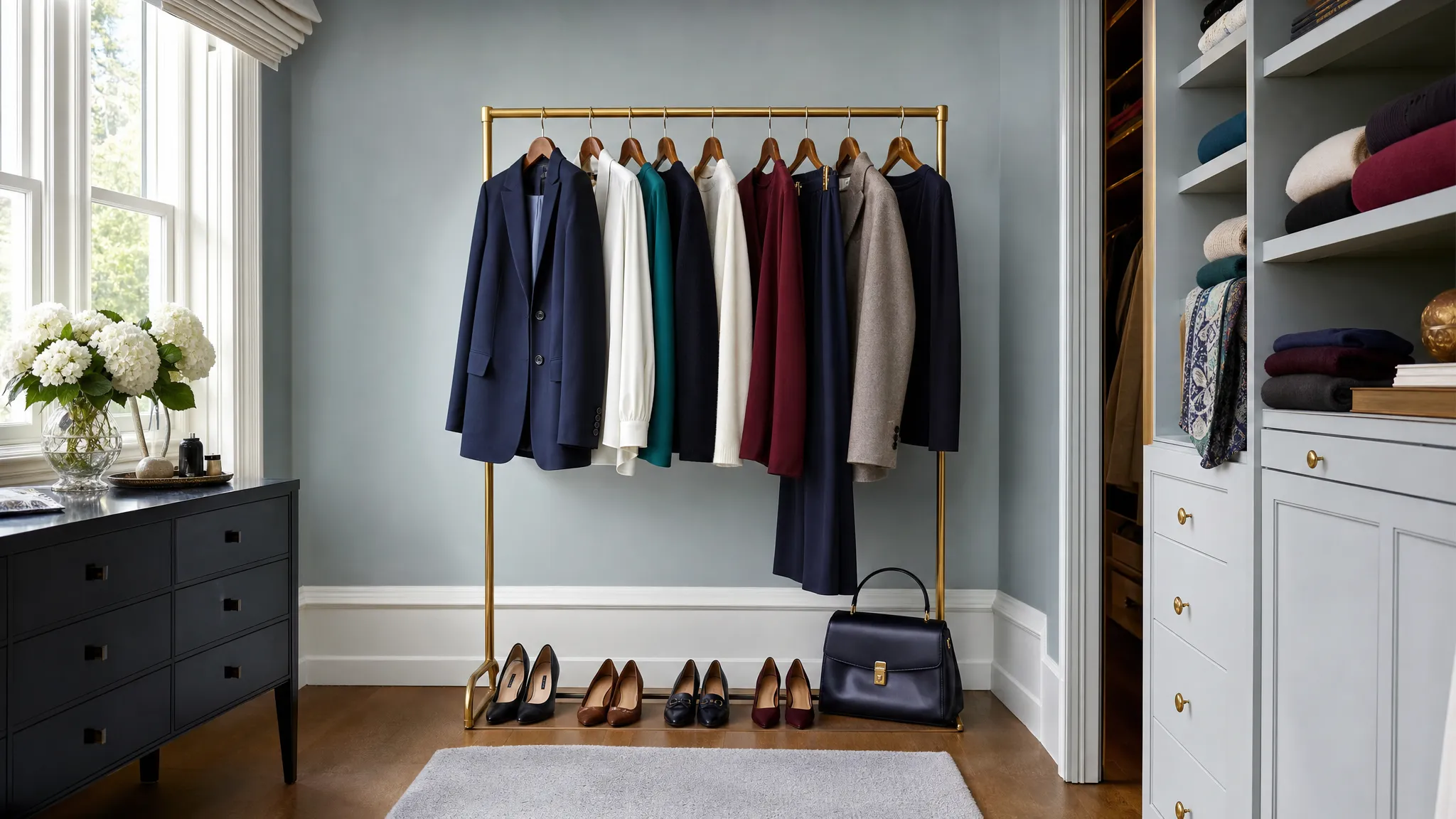
Start with broad categories: jackets, shirts and tops, knitwear, pants, dresses or skirts, shoes, and accessories. Keep each category together before you worry about color. When you need a blazer, seeing all of your blazers at once tells you more than a closet where they are scattered across several areas.

Then decide where each group belongs. Put the clothes you wear most in the easiest-to-reach areas. Give occasion pieces a separate rail, high shelf, or garment bag. Keep one small, visible spot for pieces that need mending, tailoring, or dry cleaning so they do not become invisible until the exact day you want to wear them.
A zone only works if it reflects your habits. If you always take off a jacket near the door, make it easy to return it there. If you choose accessories at the last minute, do not hide them in a box at the back of a shelf. Design for the life you have, not the tidier person you hope to become.
3. Organize by Type First, Then Use Color as a Tool
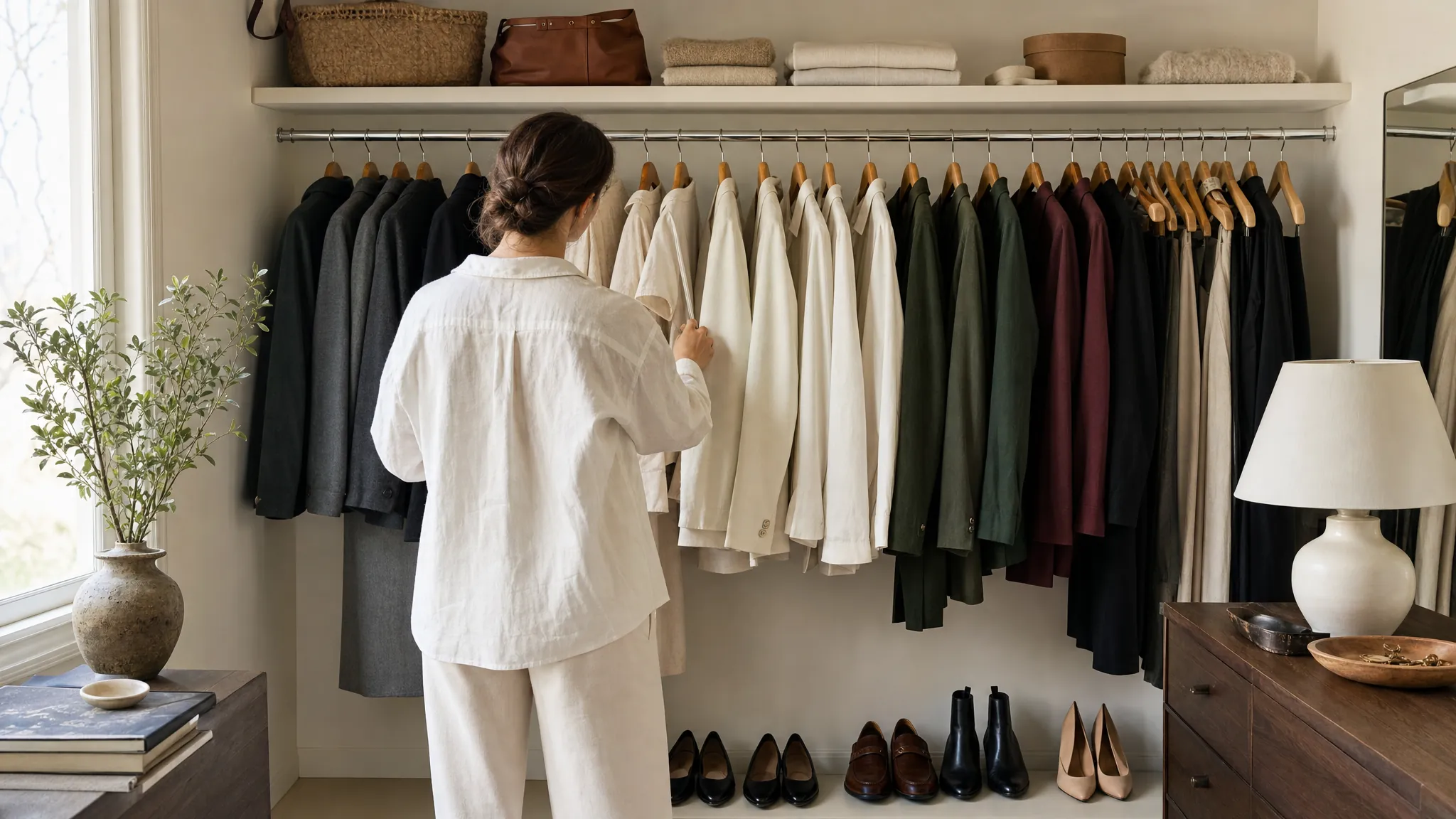
People often ask whether a closet should be organized by color or by garment type. Start with type. It is easier to build an outfit when you can see every version of the category you need. Once similar pieces are together, arrange them by color when that makes the selection faster.
Color is especially useful for shirts, knitwear, and dresses because it helps you recognize patterns. You may notice that you have four nearly identical black tops but no option that works under your favorite jacket. You may see that one strong color appears across several categories and can become an outfit thread. That is useful information, not a reason to make the closet look like a paint chart.
Within a category, use a simple order that you can remember: light to dark, warm to cool, or neutral to color. Choose one and stop there. The system should help you retrieve and return clothes without thinking.
For a more intentional color direction, Anne's note on color analysis can help you separate useful clues from rigid rules. The goal is to keep the shades that make you feel awake, recognizable, and comfortable in your own skin.
4. Make Outfit Building Visible
An organized wardrobe should help you make outfits, not just store individual pieces neatly. Once your broad groups are in place, look for relationships between them. Which pants have several tops that work? Which shoes can shift the mood of an outfit? Which jacket gives your everyday clothes more structure?
Keep the pieces you use as outfit anchors in easy view. That could be the blazer you wear for important meetings, the jeans that always fit, the dress you can rely on, or the shoe that makes several combinations feel finished. These are not necessarily your most expensive pieces. They are the ones that make getting dressed more reliable.
Try a quick test: choose three real situations from the next two weeks and build an outfit for each. Put them together on a rail, bed, or chair. If you can make each look without hunting through piles or borrowing from another category, your organization is helping. If every outfit depends on the same one item, you have identified a gap or a relationship worth improving.
Anne's guide to thinking about making outfits offers a useful next step when you have good individual pieces but they do not yet feel like a wardrobe.
5. Give Drawers and Shelves One Clear Job
Drawers and shelves become frustrating when they turn into storage for everything that has no obvious home. Assign each one a job. A drawer for knitwear, one for workout clothes, one for undergarments, one for accessories, or one for clothes that need to be tried on again is easier to maintain than a drawer full of miscellaneous items.
Fold what is easier to see folded, especially soft knits, T-shirts, denim, and casual pieces. Hang what wrinkles easily, loses shape when folded, or is useful to scan on a hanger. There is no universal rule. The right method is the one that keeps the item visible, in good condition, and easy to put away.

Use dividers only where they solve a real problem. They can be helpful for belts, scarves, small accessories, or a drawer that collapses into one large pile. They are not necessary for every shelf. Too many containers can make a simple task feel like housekeeping with a dress code.
Keep one temporary zone for clothes in transition: an item to return, a piece waiting for tailoring, something that needs laundering, or a purchase you are still deciding about. Give that zone a time limit. It is a pause button, not a permanent annex to the closet.
6. Store the Least-Used Pieces Without Losing Them
Off-season clothes and occasional pieces should not dominate the space you use every morning. Put them where they are protected but still retrievable. A labeled shelf, clear storage box, or a dedicated section of the closet is usually enough. The best system lets you retrieve a summer dress, winter coat, or event outfit without dismantling the rest of the wardrobe.
Before storing anything for a season, clean it and check whether it still deserves the space. A garment that has not worked for years is not automatically a keeper because it is tucked away. If you are unsure, make a note to revisit it when that season returns instead of making a rushed decision.
Use the same standard for special occasion clothes. Keep the pieces that still fit, feel good, and have a plausible role in your life. A wardrobe needs room for a little drama and memory. It does not need a museum of old versions of you.
7. Build a Ten-Minute Reset Into Your Week
The most organized wardrobe is not the one that never gets messy. It is the one that can be reset quickly. Give yourself ten minutes once a week to hang up the clothes that escaped, return shoes to their place, put laundry away, and move anything that needs repair or a decision into its designated zone.
That small reset matters because it keeps the visible wardrobe honest. You can see what is clean, what is missing, and what you are actually wearing. It also prevents the familiar cycle where a chair, bench, or corner of the bedroom becomes a second closet with no useful information in it.
At the beginning of a new season, take a little more time. Notice what you wore constantly, what stayed untouched, and whether your routine has changed. A light seasonal reset will tell you more than a dramatic weekend overhaul every few years.
When an Outside Point of View Helps
Organizing can reveal a deeper problem. You may be able to see every item you own and still not know what belongs together. You may notice that your wardrobe does not reflect a new role, a changed body, or the level of presence you want to bring to your work and life. In that case, a better shelf is not the whole answer.
Anne's Fresh Start Style Session gives you a focused, personal read on what is working, what is missing, and what deserves your attention before you spend another dollar. For clients who want ongoing help with editing, shopping, and building complete outfits, the Style Advisory offers deeper support.
A well-organized wardrobe does not need to look like a store. It needs to make your own clothes feel easier to use, easier to trust, and more like you.
Frequently Asked Questions
What is the best way to organize a wardrobe?
Start by organizing around how you use your clothes. Put everyday pieces where they are easiest to reach, separate special-occasion items, group broad categories together, and use color only when it helps you see possible outfits faster.
Should I organize my closet by color or type of clothing?
Start with type of clothing, then use color within each group if it is helpful. Keeping jackets together, shirts together, and pants together makes it easier to understand what you own. Color can then make each group easier to scan.
How do I organize a small wardrobe?
Keep only the clothes you can realistically use, give your most-worn pieces the best access, and use one simple system consistently. A small wardrobe works well when every item is visible enough to remember and easy enough to put away.
How often should I reorganize my wardrobe?
A light reset at the start of a new season or after a meaningful change in your routine is usually enough. The goal is not to keep arranging the closet. It is to notice when your system is no longer helping you get dressed.