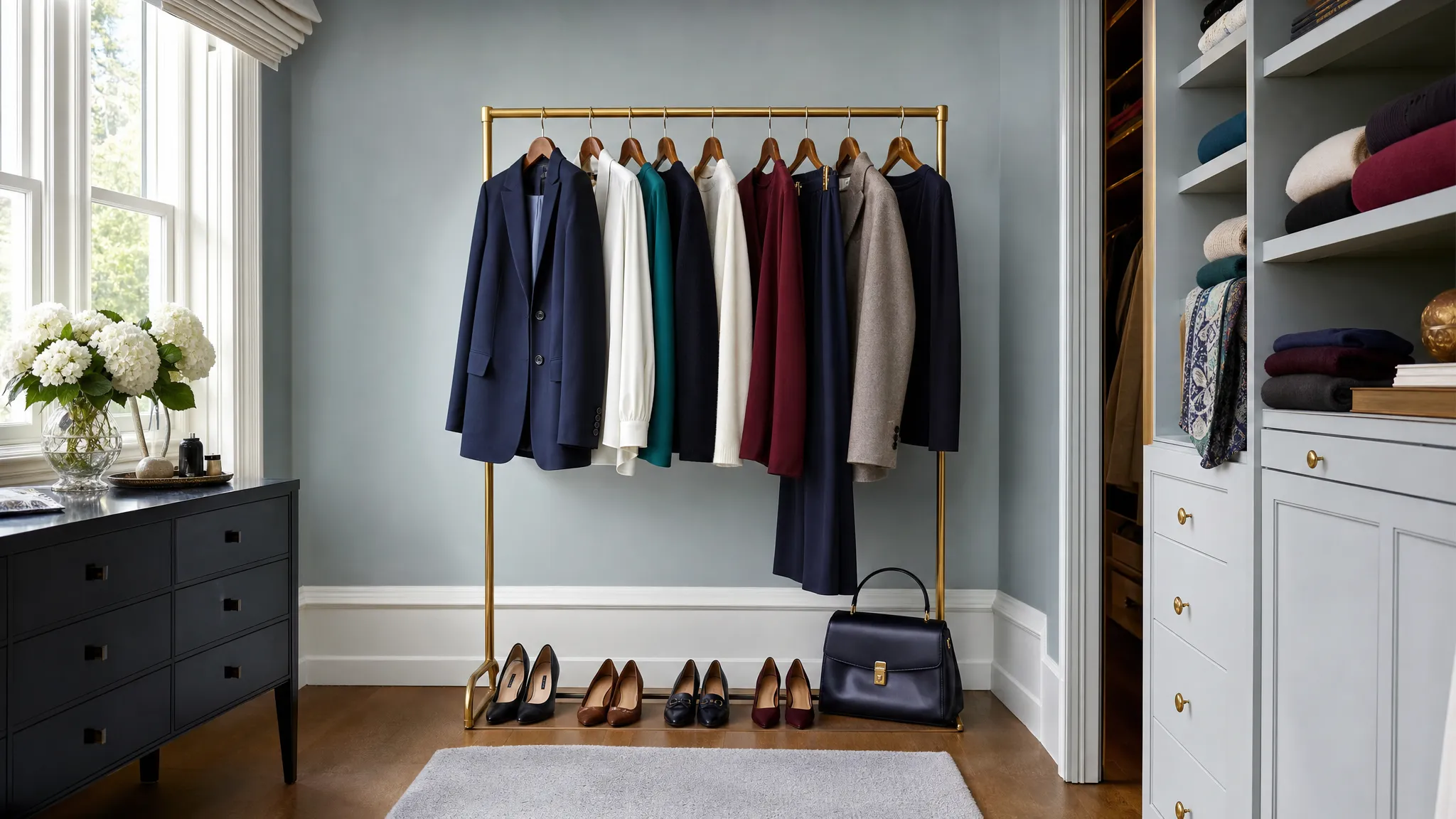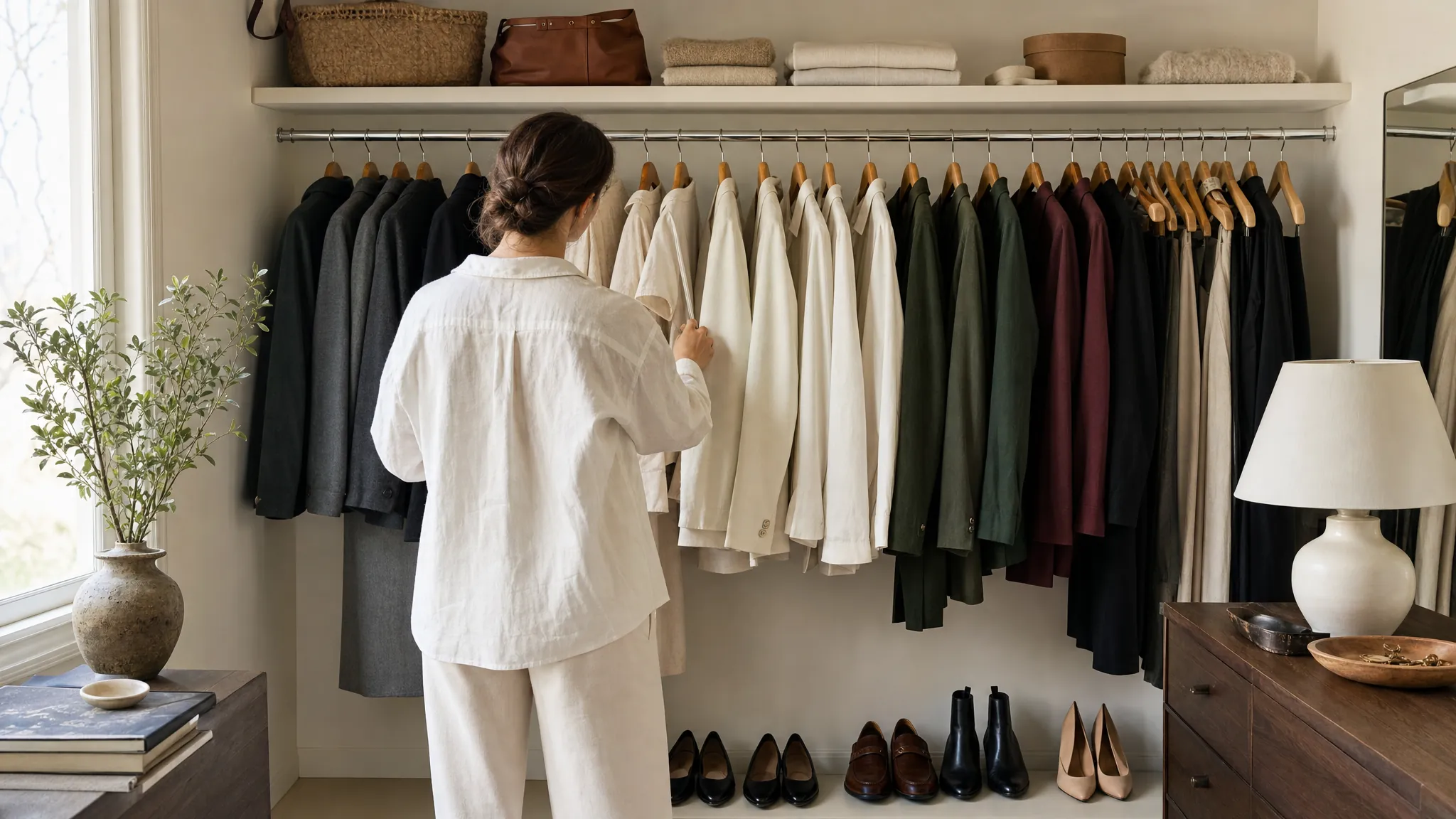
A minimalist wardrobe is not a closet with almost nothing in it. It is a closet where the things you own earn their place.
You know what belongs in it. You can make an outfit without trying on six versions of yourself. You are not buying another almost-right top because you have forgotten what is already at home.
That is the appeal of a minimalist wardrobe. It gives you more room to see the good pieces, more confidence about what to wear, and fewer decisions that lead nowhere. It is not about becoming a person who wears only black or giving up the parts of style that make you feel like yourself.
It is about replacing excess with clarity. Here is how to create a minimalist wardrobe that works for your real life, rather than a sparse imitation of someone else's.
What a Minimalist Wardrobe Actually Is
A minimalist wardrobe is a deliberate collection of clothes that fit your life, work together, and get worn. It does not have a required number of pieces. It does not have to be neutral. It does not need to look like a uniform.
The useful definition is simple: fewer clothes that do more for you. Each piece should be easy to wear, easy to combine, and connected to a real part of your week. That might mean a sharp blazer for client meetings, soft knits for a more casual schedule, a dress that handles dinner and travel, or shoes you can actually walk in.
There is a difference between minimal and deprived. If red lipstick, printed silk, great jewelry, or a dramatic coat is part of who you are, those things belong in the conversation. A wardrobe becomes easier when it has a point of view, not when it has no personality. Anne's note on finding your point of view is a useful place to start when you know your clothes are fine individually but do not add up to a recognizable you.
1. Start With Your Actual Life
Do not begin by counting hangers or copying a checklist online. Begin with your calendar.
Look at the last four weeks and the next four. Where do you spend your time? What requires you to look polished? What do you wear when you want to feel relaxed but still like yourself? Include work, errands, travel, dinners, events, weekends, exercise, and the strange in-between parts of life that never fit neatly into a dress code.
Then write down the three or four outfit situations you repeat most. A person who works from home, travels twice a month, and has client dinners needs something different from a person who is in an office five days a week or retired but socially busy. This sounds obvious, but most unnecessary purchases happen when someone shops for an imagined life instead of the one they already have.
For each situation, name the impression you want to make. Comfortable and professional are practical requirements. Go one step further: grounded, decisive, warm, elegant, creative, relaxed, memorable. Those words give you a filter. They make it easier to see whether a piece deserves space in your closet.
2. Pull Out the Pieces You Already Trust
Before you decide what to donate or buy, find the clothes you reach for without a debate. These are your clues. They tell you more about your personal style than a mood board ever could.
Pull out the trousers that always fit, the jacket that changes your posture, the top that works under everything, the dress you can wear for hours, the shoe you reach for when you need to feel put together. Do not worry yet about whether they match. Just gather the pieces that have already earned your trust.
Now ask why you wear each one. Is it the color, fabric, shape, ease, level of polish, or the way it works with other clothes? Look for patterns. You may discover that you do not actually need more basics. You need a more consistent silhouette, better shoes, or a stronger layer that connects the things you already love.
This is also the moment to be honest about fit. A beautiful item that makes you tug at it, avoid sitting down, or feel like an earlier version of yourself is not a foundation piece. If your life has shifted, Anne's guide to rebuilding a wardrobe after a life change can help you sort through that transition without throwing everything out.
3. Create Three to Five Outfit Formulas
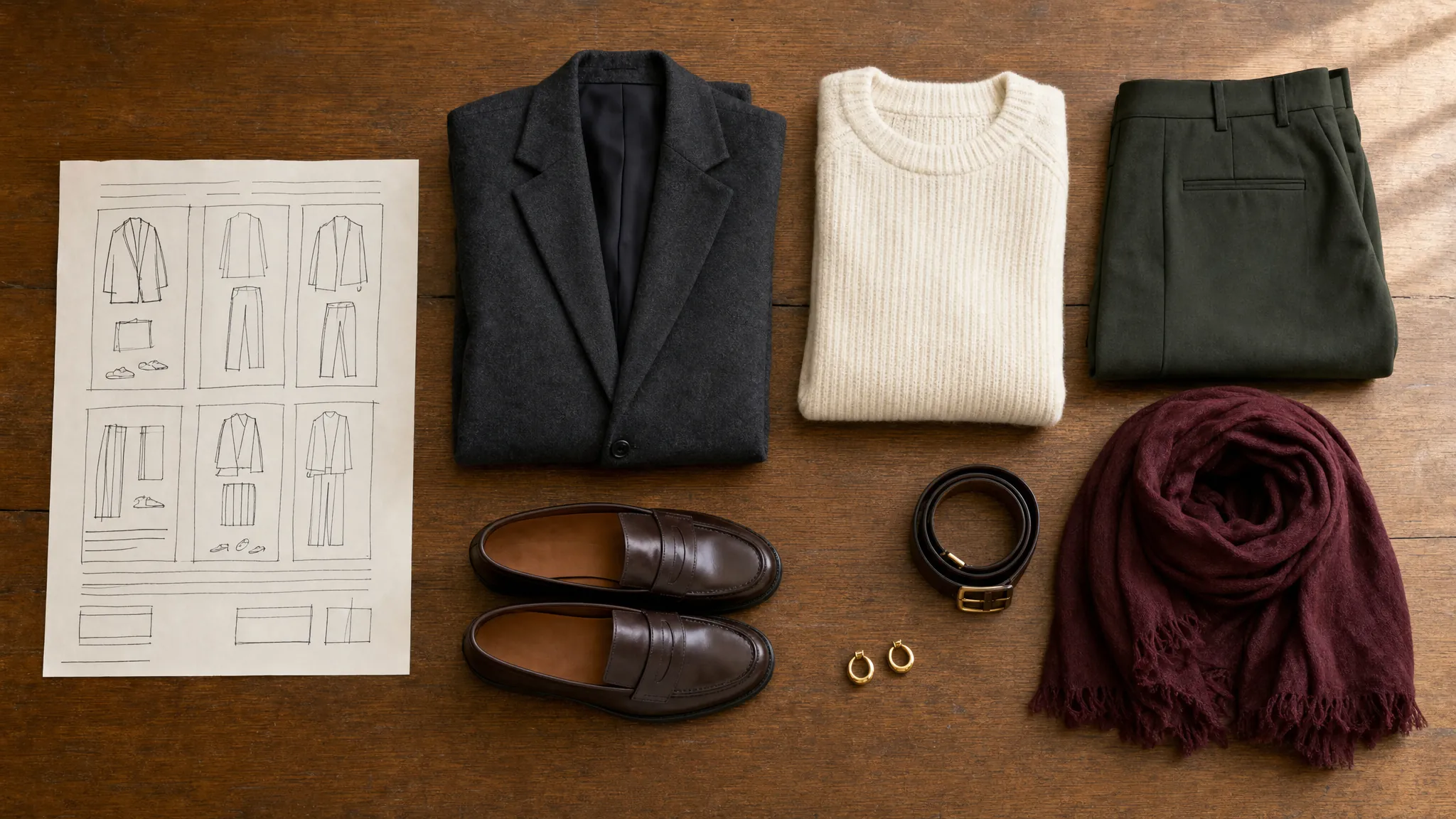
An outfit formula is a combination you can repeat without feeling repetitive. It gives a minimalist wardrobe structure.
Your formula might be wide-leg trousers, a refined knit, and loafers. It might be jeans, a silk blouse, and a blazer. It might be a column of color with an interesting coat. The exact formula does not matter. What matters is that it feels good on you and works for the places you actually go.
Choose three to five formulas, then make a quick list of the pieces each one needs. This is more useful than deciding you should own a certain number of shirts or sweaters because it forces every item to have partners. A skirt that only works with one top may still be worth keeping, but it is not carrying much of the wardrobe. A well-cut pant that works with six tops, three shoes, and a jacket is doing serious work.
If putting outfits together is the hard part, read how to think about making outfits before you shop. It will help you see clothes as relationships rather than separate purchases.
4. Keep the Colors That Make You Look Alive
Minimalist style is often presented as a lot of beige, gray, black, and white. Those colors can be useful, but they are not the assignment.
Start with the colors you wear often and feel good in. Notice whether you prefer soft contrast or strong contrast, dark foundations or lighter ones, warm metals or cool ones. From there, choose a small core palette that lets your main pieces work together. Add accent colors or prints that make the wardrobe feel personal.
A practical palette might be charcoal, cream, dark denim, forest green, and wine. Another might be navy, camel, white, bright red, and leopard. The goal is not to limit yourself to five colors forever. It is to reduce the number of pieces that are beautiful in isolation but impossible to wear with what you own.
Color analysis can be helpful when it gives you clarity, but it should not become another rulebook. Anne explains the useful side of it in her guide to color analysis: use color to support how you want to look and feel, not to box yourself in.
5. Edit With a Clear Test
Once you have identified your trusted pieces, your repeated outfit formulas, and your palette, you can make better decisions about everything else.
For each item, ask:
- Does it fit and feel good on me now?
- Does it serve a real part of my life?
- Can I make at least three outfits with it?
- Would I be genuinely pleased to wear it next week?
A yes to all four is an easy keep. A no to all four is easy too. The middle is where you slow down. Perhaps the piece needs tailoring. Perhaps it belongs in a small occasion section of the closet. Perhaps it is beautiful but no longer speaks to the person you are now.
Do not force yourself to make every decision in one afternoon. Put the uncertain pieces away for a month, then notice whether you miss them. Space makes the difference between a thoughtful edit and a purge you regret.
6. Make a Gap List, Not a Shopping List
A minimalist wardrobe does not come from filling a cart with a new set of basics. It comes from solving specific problems.
After you make outfits from the pieces you kept, write down what stops them from working. Be exact. “Tops” is not a useful gap. “A refined warm-weather top that works with my navy trousers and under my cream jacket” is useful. “Shoes” is vague. “A low, polished shoe I can walk in during a client day” is a real assignment.
Specificity protects you from buying an attractive duplicate. It also means you can wait for the right thing instead of trying to make a near miss work. When a piece is going to take up space in a smaller wardrobe, it should make your life easier.
This way of buying has a larger benefit, too. The clothing and textile waste statistics behind the fashion system are sobering, and the U.S. Environmental Protection Agency's textile data shows how much textile material is discarded. The answer is not guilt. It is choosing more carefully, wearing what you own, and resisting the habit of treating every passing problem as a reason to buy another thing.

7. Wear-Test Before You Add More
Now wear the wardrobe you have created. This is where a minimalist wardrobe becomes real.
For two weeks, take a quick photo when an outfit works. Notice which pieces you reach for, what makes you hesitate, and which combinations feel effortless. You are gathering evidence. Your closet will tell you whether you need another jacket, a better sweater, a more useful shoe, or simply an alteration that makes an existing piece work again.
Pay attention to the feeling as much as the photograph. Do you stop adjusting the clothes? Do you feel appropriate without feeling bland? Do you move through the day without changing as soon as you get home? Those are signs that an outfit is serving you.
It also helps to keep a short “not again” list. A neckline you never wear, pants that wrinkle immediately, a heel you cannot walk in, an expensive fabric that needs too much care. These details are often more valuable than a list of things you think you want.
8. Give Your Wardrobe Some Breathing Room
Minimalism is not a finish line. Your wardrobe will change as your schedule, body, work, travel, and preferences change. The aim is to keep a light hand on it.
Once a season, look at the pieces you have not worn. Before you decide they are a failure, ask whether they need a partner, a repair, an alteration, or a different season. If the answer is no, let them go thoughtfully. Sell, donate, consign, or pass along what still has life.
Buying less does not mean buying nothing. It means letting new pieces into the wardrobe for a reason. Textile Exchange's 2025 Materials Market Report is a reminder that the wider clothing system is still growing quickly. Your individual closet will not solve that by itself, but a wardrobe built for repeat wear is a better answer than a cycle of constant replacement.
When You Need a Second Set of Eyes
It can be difficult to see your own closet clearly. You may know what you like but not understand why it is not working together. You may be holding onto clothes from an old life, repeating purchases that never become outfits, or facing a bigger change that makes your existing wardrobe feel off.
That is where a personal point of view makes a real difference. The Fresh Start Style Session is a focused way to get clear on what to keep, what to change, and what deserves your money next. For clients who want more support putting the whole wardrobe together, the Style Advisory goes deeper, from the edit through shopping, outfits, and the decisions that shape how you show up.
A minimalist wardrobe should not make you less visible. It should make it easier for the right things to be visible: your standards, your taste, and the person wearing the clothes.
Frequently Asked Questions
How many clothes should be in a minimalist wardrobe?
There is no ideal number. Keep enough clothes to dress for your real life, your laundry rhythm, the weather, and the occasions that matter to you. The right wardrobe feels useful, not restrictive.
Does a minimalist wardrobe have to be neutral?
No. A minimalist wardrobe can include color, pattern, and memorable accessories. The goal is not to look plain. It is to own pieces that work together and feel like you.
Should I get rid of everything before creating a minimalist wardrobe?
No. Start by identifying what you wear and why. The best foundation is usually already in your closet, with a few changes and additions made over time.
How do I stop buying clothes I do not wear?
Give every purchase a job. Before buying, name the outfits it completes, the occasions it serves, and the pieces already in your closet that will support it.
 Talk to Anne