Decluttering your wardrobe is not supposed to leave you with a row of identical basics and the uneasy feeling that you just gave away something you will need next week.
The goal is simpler and more useful: make it easier to see what you own, get dressed with less friction, and stop spending money on clothes that never become part of your life.
A good wardrobe edit is not a test of discipline. It is a way to bring your closet back into line with the person you are now, the life you actually live, and the impression you want to make. You are not trying to prove that you can own the least. You are trying to keep the pieces that do their job, release the ones that do not, and identify the few changes that would make everything work better.
Here is how to declutter your wardrobe without turning it into a stressful weekend project or a regretful purge.
Start With the Life You Are Dressing For
Before you take a single thing off a hanger, look at your real calendar. Think about a normal month, not the fantasy version of your life you may have been shopping for.
Where do you go? What do you need to do there? What needs to feel polished, relaxed, practical, memorable, or authoritative? Include work, travel, dinners, errands, family time, exercise, events, and the ordinary days in between. Those ordinary days matter most because they are where most of your wardrobe should earn its place.
Then write down three to five outfit situations you repeat. You may need capable clothes for client meetings, easy outfits for working from home, looks that travel well, and one or two options for dinners or occasions. This gives the edit a purpose. A silk dress that never fits your current life is not a failure. It may simply belong in a small occasion section, in a different home, or in a past version of your wardrobe.
If your life has changed recently, start there. A new role, different body, move, divorce, retirement, shift to remote work, or increased visibility can make familiar clothes feel strangely wrong. Anne's guide to rebuilding your wardrobe after a life change can help you sort through that without assuming everything needs to go.
Give Yourself a Better Question Than “Should I Keep This?”
“Should I keep this?” can make every decision feel personal and final. It is also too broad. Try asking what job the item does instead.
Does it work for a real part of your week? Does it fit comfortably now? Does it make you feel more like yourself, or does it ask you to become somebody else before you can wear it? Does it work with enough other pieces to become an outfit rather than a nice idea on a hanger?
A wardrobe is a network of relationships. A beautiful blouse that works with three pairs of pants, a favorite jacket, and two shoes is valuable. A beautiful blouse that only works with one pair of heels you avoid wearing may be harder to justify, even if you still like looking at it.
That does not mean every piece needs to be practical in the same way. You can keep something joyful, sentimental, dramatic, or occasional. Just name it honestly. Once you separate your everyday wardrobe from your special pieces, you stop expecting one closet to do every job at once.
Make the First Pass Easy
Do not start with the pieces you feel conflicted about. Begin with the obvious decisions. Pull out clothes that are damaged beyond repair, no longer fit and are not worth altering, or have been waiting years for a life you do not want anymore. Set aside anything that clearly belongs to someone else, such as a borrowed item, a costume, or a piece you have been meaning to return.
Then find the clothes you already trust. These are often more revealing than the things you dislike. Pull out the pants that fit without negotiation, the jacket that changes your posture, the knit you wear on repeat, the shoe you reach for when you need to feel pulled together, and the dress that works when you have no time to think. These pieces show you the shapes, fabrics, colors, and level of polish that already work.
There is no need to decide every uncertain item in the first round. Put the questions in a separate area. A pause is not indecision. It gives you room to see the wardrobe that remains before asking whether a particular piece can earn its way back in.
Use the Three-Outfit Test
For the pieces that are not obvious keeps or obvious exits, use the three-outfit test. Can you make three outfits with the item using clothes, shoes, and layers you own now?
Do not count imaginary purchases. Do not rely on a future version of your body or a rare kind of weather. Work with your real closet. Put the item on with the pieces it needs, and consider the whole outfit from head to toe.
If you can make three useful looks easily, the item has a place. If you can only make one look and it requires a chain of compromises, that is useful information too. It might need a specific partner, a small alteration, or permission to leave.

This test changes the way you see clothes. It moves you away from asking whether an item is attractive in isolation and toward whether it participates in your life. If outfit-making is the part that keeps you stuck, read Anne's note on how to think about making outfits. The skill is less about having more options and more about noticing how the right pieces support one another.
Keep Fit and Feeling Separate From Size
Size is a number. Fit is the experience of wearing a piece. You can keep something that is not your current size if it is well made, you genuinely want it, and you are comfortable storing it without treating it as a daily accusation. You can also let go of something that technically fits but makes you tug, pull, adjust, or avoid sitting down.
Be specific about why something is not working. Maybe the trousers are a little long and worth hemming. Maybe the blazer has a good shape but needs the sleeves adjusted. Maybe the fabric makes you feel overheated, the neckline never feels right, or the color is beautiful but drains you. These are different problems, and they need different answers.
Tailoring can save a strong piece. It cannot turn a garment you never liked into a favorite. Do not send everything questionable to the tailor in the hope that it will solve a deeper mismatch. Start with the pieces that already feel close to right.
Let Your Best Colors and Shapes Do More Work
When a closet is crowded, it can be hard to see the patterns. Lay your reliable pieces together and notice what repeats. You may find that you prefer a certain length of jacket, a clean shoulder line, lower-contrast outfits, stronger color, soft fabrics, or a particular kind of shoe. These are not rules. They are clues.
Use them to evaluate the rest. A wardrobe gets more useful when its pieces speak a similar visual language. That does not mean everything has to match. It means your colors, proportions, and level of formality have enough overlap that you can build an outfit without starting from scratch each time.
If color is part of the problem, avoid turning it into a rigid rulebook. A useful approach to color analysis should make shopping and getting dressed easier, not make you afraid of a shade you love. Keep the colors that make you look awake and feel recognizable, then give them useful partners.
Do Not Make a Shopping List Yet
A wardrobe edit often reveals gaps. That is a good result, but it is not a reason to start buying immediately.
First, make outfits from what you have. Photograph the combinations that work. Notice where you hesitate. Perhaps you have good pants but no reliable top for them. Perhaps several outfits would work with one better shoe. Perhaps a jacket needs altering, or an older favorite needs replacing with a more current version.
Write those needs as assignments, not categories. “Tops” is too vague. “One refined short-sleeve top that works under my navy blazer and with my cream pants” is a real assignment. “Shoes” is vague. “A low, polished shoe I can walk in for meetings and dinners” is precise enough to keep you from buying another almost-right pair.
This is the difference between filling a closet and building a wardrobe. The new piece needs a job and a group of existing partners before it earns your money.
Choose a Thoughtful Exit for Good Clothes
Once you have your keep pile and a realistic set of questions, sort the pieces you are ready to release by condition. A well-kept item may be worth selling, consigning, donating, or passing to someone who will use it. Something damaged may be repairable, recyclable through a local textile program, or ready for the bin if it truly has no further use.
Do not use donation as a way to avoid making decisions. A donation bag should contain clean, wearable clothes that someone else could reasonably use. If an item is stained, stretched out, or worn beyond repair, look for an appropriate textile-recycling option instead of adding it to a charity's sorting burden.

There is a larger reason to be thoughtful here. The U.S. Environmental Protection Agency reports that 11.3 million tons of textiles went to U.S. landfills in 2018. One closet cleanout will not solve that system, but keeping clothes in use when they are still useful is a better habit than treating every unwanted item as somebody else's problem. Anne's clothing and textile waste reference page puts that wider picture in context.
Keep a “Not Yet” Box for the Hard Decisions
Some clothes are hard to release because they represent a good memory, a past version of yourself, money spent, or a possibility you are not ready to close. You do not have to force those decisions in one afternoon.
Put uncertain pieces in a box or separate closet section with a date on it. Give yourself a month, a season, or a reasonable period based on the item. If you do not reach for the piece, do not miss it, and cannot create a useful outfit with it, you have your answer without turning the process into a fight.
This works especially well for sentimental clothes. You might keep one or two pieces that matter and release the rest. A memory does not have to live in every garment that was present when it happened.
Make the Closet Easier to Use When You Put It Back
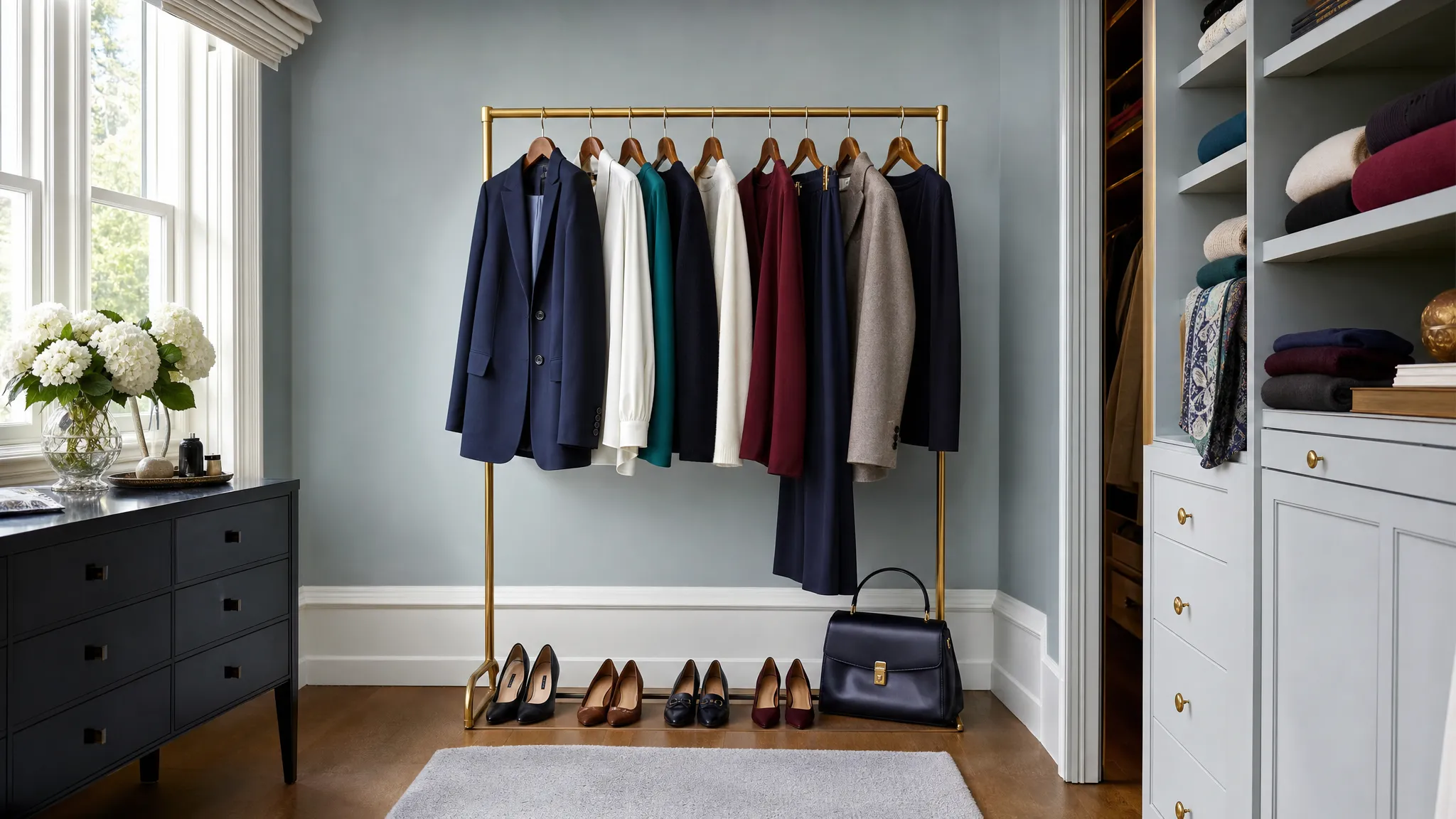
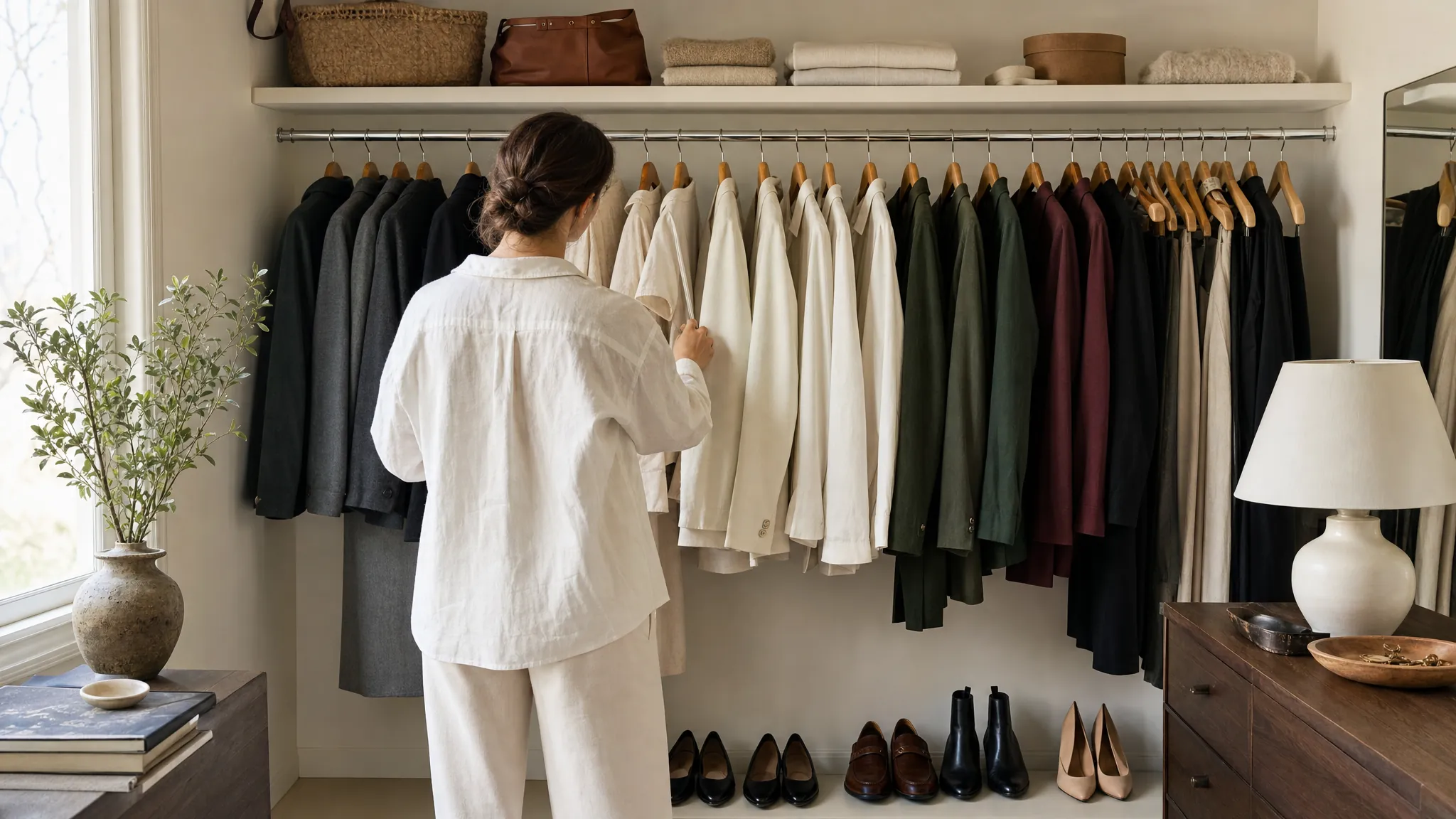
Once you have edited, put the wardrobe back in a way that helps you see it. Group by broad category first: jackets, tops, pants, dresses, knitwear, shoes. Then use color or outfit type if that is helpful to you. The exact system is less important than being able to find what you own.
Give your best everyday pieces the easiest access. Store special occasion clothes separately. Keep repair and tailoring items in one small, visible place so they do not disappear into a pile. Put off-season pieces away only if you can retrieve them without making the closet feel like a storage unit.
You are creating an environment that makes good choices easier. When the clothes you wear are visible and the wrong ones are gone, you are less likely to buy a duplicate because you forgot what you already have.
Use the Two-Week Wear Test
After your edit, wear the wardrobe for two weeks before buying more. Keep a quick note on your phone or take a photo when an outfit works. Record the moments you feel stuck too. Those moments point to the real gaps.
You may discover that you need less than you thought. A pair of pants you ignored may become useful with a different shoe. A dress may need a jacket. A closet full of good clothes may only need one strategic layer, a repair, or a little more attention to proportions.
You may also discover that the problem is not the closet at all. Sometimes what feels like a wardrobe issue is a confidence issue, a style shift, or a question about how you want to be seen. That is where a personal point of view can make the difference.
When a Second Set of Eyes Helps
It is hard to see your own wardrobe objectively. You may know what you like but not understand why it is not working together. You may be holding on to clothes from an old life, repeating the same expensive mistake, or facing a visible new chapter that makes your current clothes feel out of step.
The Fresh Start Style Session is a focused way to get clear on what is working, what is missing, and what deserves your attention before you spend another dollar. For clients who want deeper help with the edit, shopping, outfit planning, and the bigger picture, the Style Advisory provides the ongoing support to make the wardrobe work as a whole.
A good declutter should leave you with more than empty hangers. It should leave you with a clearer point of view, better outfits, and a closet that supports the life you have now.
Frequently Asked Questions
How do I declutter my wardrobe without getting overwhelmed?
Work in categories and make only the obvious decisions first. Keep what fits and gets worn, set aside the uncertain pieces, and return to them after you have seen what your wardrobe needs to do for your real life.
What clothes should I get rid of first?
Start with pieces that are damaged beyond repair, do not fit and are not worth altering, have not been worn for a long time, or no longer belong to the life you live now.
Should I donate clothes I am unsure about?
Not immediately. Put uncertain pieces in a separate box for a month or a season. If you do not miss them or cannot make a useful outfit with them, you can decide whether to sell, donate, consign, or recycle them.
How often should I declutter my wardrobe?
A light seasonal review is usually enough. Look for items that no longer fit, need repair, or have stopped earning their place, then make small decisions before the closet becomes overwhelming again.